

Across ISO management systems, whether it be ISO 9001, ISO 14001 or ISO 45001 – the concept of risk is central. Yet one of the most commonly misunderstood and underutilised tools remains the risk register.
Too often, it becomes a static document created for compliance, rather than a living framework that actively supports decision-making, performance and continual improvement.
So what makes a risk register effective, and where do organisations typically go wrong?
Understanding The Foundations
At its core, a risk register is about structured thinking. It is not just a list of hazards or issues; it is a systematic way to:
- Identify risks and opportunities
- Assess their significance
- Implement controls
- Monitor effectiveness
ISO standards are deliberately flexible. They don’t prescribe exactly how a risk register should look, but they do expect organisations to demonstrate that risk-based thinking is embedded into operations.
The foundation, therefore, is not the template – it’s the intent.
A strong risk register answers three key questions:
- What could happen?
- What would the impact be?
- What are we doing about it?
If those answers are unclear, the register isn’t doing its job.
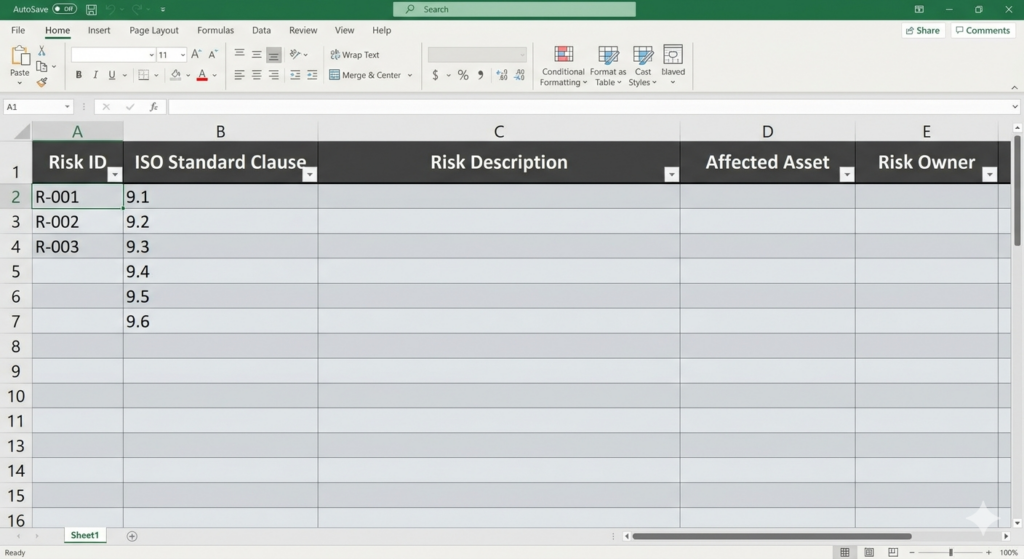
The Detail Dilemma - Too Much Vs Too Little
One of the biggest challenges is finding the right level of detail.
When It’s Too Generic
A generic risk register often includes vague entries like:
- “Environmental impact”
- “Health and safety risk”
- “Compliance failure”
While these may tick a box, they lack clarity and are difficult to act upon. The consequences include:
- Poor ownership (no one knows who is responsible)
- Ineffective controls (actions are not targeted)
- Limited value during audits or reviews
In short, a generic register rarely drives improvement, it simply documents intent.
When It’s Too Detailed
On the other hand, overly detailed registers can become unmanageable. Hundreds of micro-risks, excessive scoring criteria and complex matrices can:
- Overwhelm teams
- Reduce engagement
- Make updates infrequent or inconsistent
The risk here is that the register becomes a burden rather than a tool.
Finding the Balance
The most effective risk registers strike a balance:
- Specific enough to be actionable
- Structured enough to be consistent
- Simple enough to be maintained
A good test is this: can a team member understand the risk and the required control within seconds? If not, it needs refining.
Environmental Aspects & Impacts - A Critical Link
Within ISO 14001, the concept of environmental aspects and impacts is closely aligned with risk registers – but they are often treated separately.
This is a missed opportunity.
Environmental aspects (what you interact with) and impacts (the effect of that interaction) should feed directly into your risk register. For example:
- Aspect: Fuel storage
- Impact: Potential soil contamination
- Risk: Environmental pollution, regulatory breach, reputational damage
By integrating aspects and impacts into the risk register, organisations can:
- Prioritise significant environmental risks
- Align operational controls with environmental objectives
- Demonstrate a clear link between activities and outcomes
Without this integration, environmental management can become fragmented, reducing its effectiveness.
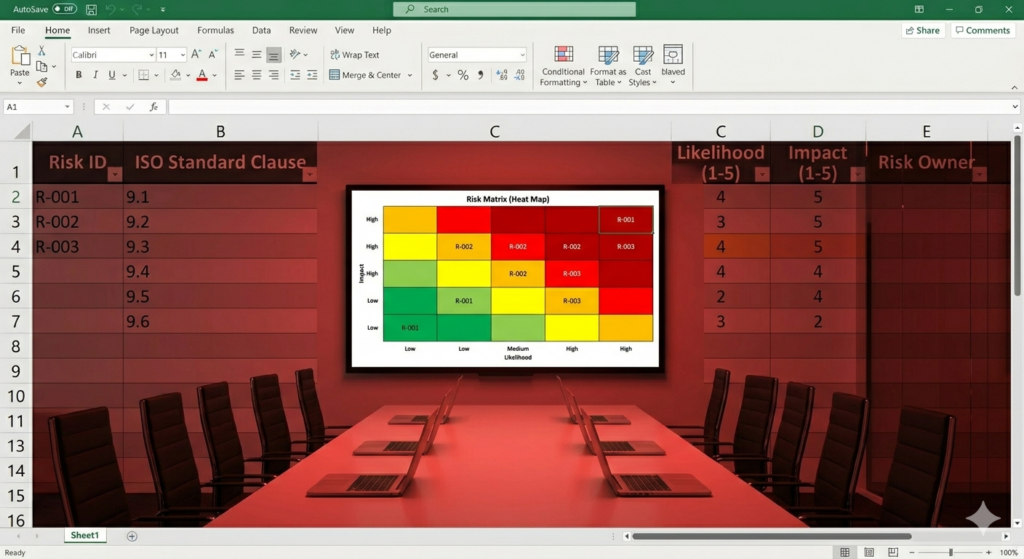
Common Issues We See
Across industries, several recurring challenges emerge:
- Static documents: Registers are created once and not reviewed regularly
- Lack of ownership: Risks are not assigned to accountable individuals
- Poor linkage: Disconnect between risks, objectives, and operational controls
- Inconsistent scoring: Risk ratings that are subjective or unclear
- Audit-driven thinking: Registers updated only in preparation for audits
These issues limit the value of the risk register and undermine the intent of ISO standards.
The Ideal Outcome: A Strategic Risk Register
When implemented effectively, a risk register becomes far more than a compliance tool, it becomes a strategic asset.
At Pro Safety Management, we position risk registers to:
- Drive continual improvement
- Integrate quality, safety, and environmental considerations
- Provide clear evidence of risk-based thinking
- Engage teams at all levels
- Support informed decision-making
The ideal outcome is a living system where:
- Risks are reviewed as part of normal operations
- Controls are actively monitored and improved
- Environmental aspects and impacts are fully embedded
- Leadership has clear visibility of organisational risk
Working With Us
Our approach is practical and tailored. We don’t just create documents – we help organisations build systems that work in the real world.
By working with Pro Safety Management, clients can expect:
· Clear, structured risk registers aligned to ISO standards
· Integration of environmental aspects and impacts
· Right-sized levels of detail – no unnecessary complexity
· Improved engagement from operational teams
· Confidence during audits and inspections
Most importantly, we help turn risk management from a requirement into a competitive advantage.
For any and all ISO requirements your organisation has, please give us a call and book your free consultation and we will be more than happy to see how we can help your business.


